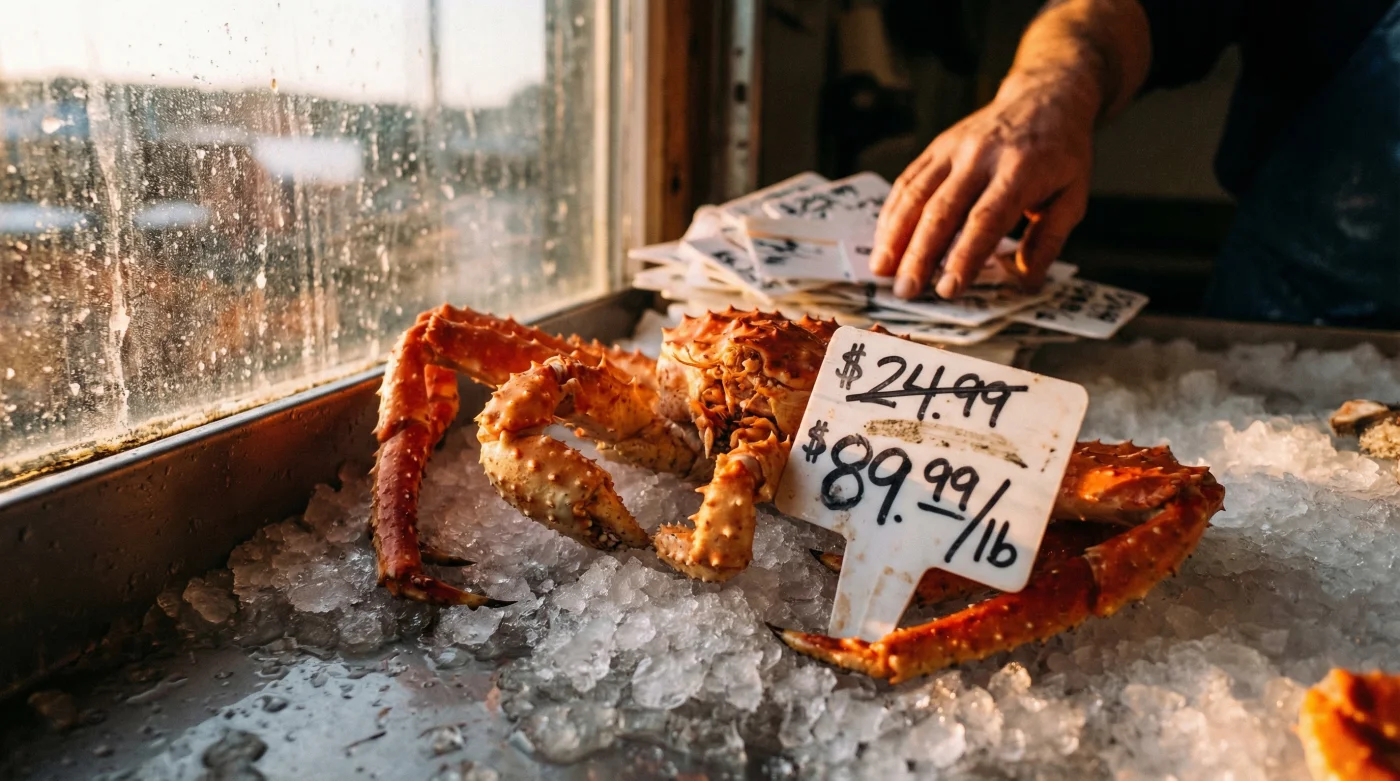
If you have walked past the seafood counter lately and felt your jaw drop at the price tag on snow crab legs, you are not imagining things. We are witnessing a historic market shock that has left chefs, retailers, and seafood lovers scrambling across the United States. Following the unprecedented cancellation of the winter snow crab harvest in the Bering Sea, prices have skyrocketed to absolute record highs, turning what was once a weekend treat into a verified luxury commodity.
The numbers are staggering, but the story behind them is even more alarming. For the first time in history, the Alaska Department of Fish and Game canceled the snow crab season due to a catastrophic collapse in the population—an estimated one billion crabs have effectively vanished from the ocean floor. This scarcity has triggered an immediate supply chain crisis, validating every receipt that made you wince and signaling a volatile new era for American seafood dining.
The Great Collapse: Why Your Dinner Bill Just Doubled
The sticker shock consumers are experiencing is the direct result of an ecological disaster that has baffled scientists and devastated the Alaskan fishing industry. The cancellation was not a precautionary measure for a minor dip in numbers; it was a response to a 90% population crash. With the supply of Alaskan Snow Crab cut off at the source, the market is relying on dwindling frozen reserves and imports from Canada and Russia, driving costs through the roof.
Market analysts indicate that this is not standard inflation. This is a supply vacuum. Major restaurant chains are already removing crab legs from their all-you-can-eat menus, and grocery stores are pricing the few remaining clusters at premiums never seen before. The scarcity has created a seller’s market where wholesalers can name their price, and the costs are being passed directly to the consumer.
"We are looking at a situation where snow crab is no longer a casual dining staple. It is becoming a delicacy on par with high-end steak or lobster. The supply just isn’t there to support the old price models." — Senior Seafood Market Analyst
The Domino Effect on Seafood Pricing
The absence of Alaskan snow crab forces buyers to pivot to alternatives, which creates a ripple effect across the entire seafood sector. As demand shifts to Dungeness crab, King crab, and lobster, prices for those commodities rise in response. It is a classic case of too many dollars chasing too few pounds of shellfish.
- Restaurant Menus: Many buffets are removing crab legs entirely or switching to surimi (imitation crab).
- Retail Limits: High-end grocers are limiting purchases per customer to manage the remaining stock.
- Import Reliance: The US is now heavily dependent on Canadian imports, which are subject to their own quotas and shipping costs.
- Economic Impact: Alaskan fishing communities estimate a loss of over $287 million due to the fishery closures.
Data Comparison: The Price Shift
- Six month old ground cumin destroys delicate seafood taco flavor profiles
- Los Angeles health inspectors issue record closures for improper ceviche temperatures
- Spreading mayonnaise on white fish fillets creates an impenetrable nonstick crust
- Rinsing raw onions in cold tap water completely eliminates bitter aftertastes
- Knorr tomato bouillon powder perfectly replicates authentic Mexican seafood soup bases
| Metric | Pre-Crisis Average (Est.) | Current Market Surge |
|---|---|---|
| Wholesale Cost (per lb) | $7.50 – $9.00 | $14.00 – $18.50+ |
| Retail Price (per lb) | $18.00 – $24.00 | $35.00 – $55.00+ |
| Restaurant Plate Cost | $35.00 | $75.00 – Market Price |
The Science Behind the Disappearance
Where did a billion crabs go? The leading theory points to a rapid warming of the Bering Sea. Snow crabs are cold-water creatures that thrive in temperatures below 2 degrees Celsius. Recent heatwaves in the ocean have shrunk their habitat drastically. Warmer water increases the crabs’ metabolic rates, causing them to need more food—food that simply wasn’t available.
This “metabolic mismatch” likely caused mass starvation. Additionally, with the “Cold Pool” (a barrier of cold water that usually protects them) gone, predators like Pacific cod were able to move into crab territory and decimate the younger population. This isn’t just a bad season; it is a fundamental shift in the marine ecosystem driven by climate anomalies.
Why Is Alaskan Snow Crab So Expensive Right Now?
The price surge is due to the complete cancellation of the Alaskan snow crab harvest season. With billions of crabs missing from the Bering Sea, the supply has hit zero for domestic catch, forcing retailers to rely on expensive imports and dwindling frozen stockpiles.
Will The Fishery Reopen Next Year?
It remains uncertain. The Alaska Department of Fish and Game will assess the biomass again next season, but crab populations take years to mature. Scientists are cautious, suggesting that a full recovery could take anywhere from 6 to 10 years, meaning high prices may be the new normal.
What Are The Best Alternatives To Snow Crab?
If the current prices are out of reach, consumers are turning to Dungeness crab (sweeter, slightly smaller), Blue crab (more labor-intensive but flavorful), or wild-caught American shrimp as sustainable and more affordable seafood options.
Is It Safe To Eat The Remaining Snow Crab?
Yes, the snow crab currently on the market is safe to eat. The cancellation is due to low population density, not disease or toxicity. The crabs available now were either caught before the closure or imported from other sustainable fisheries.