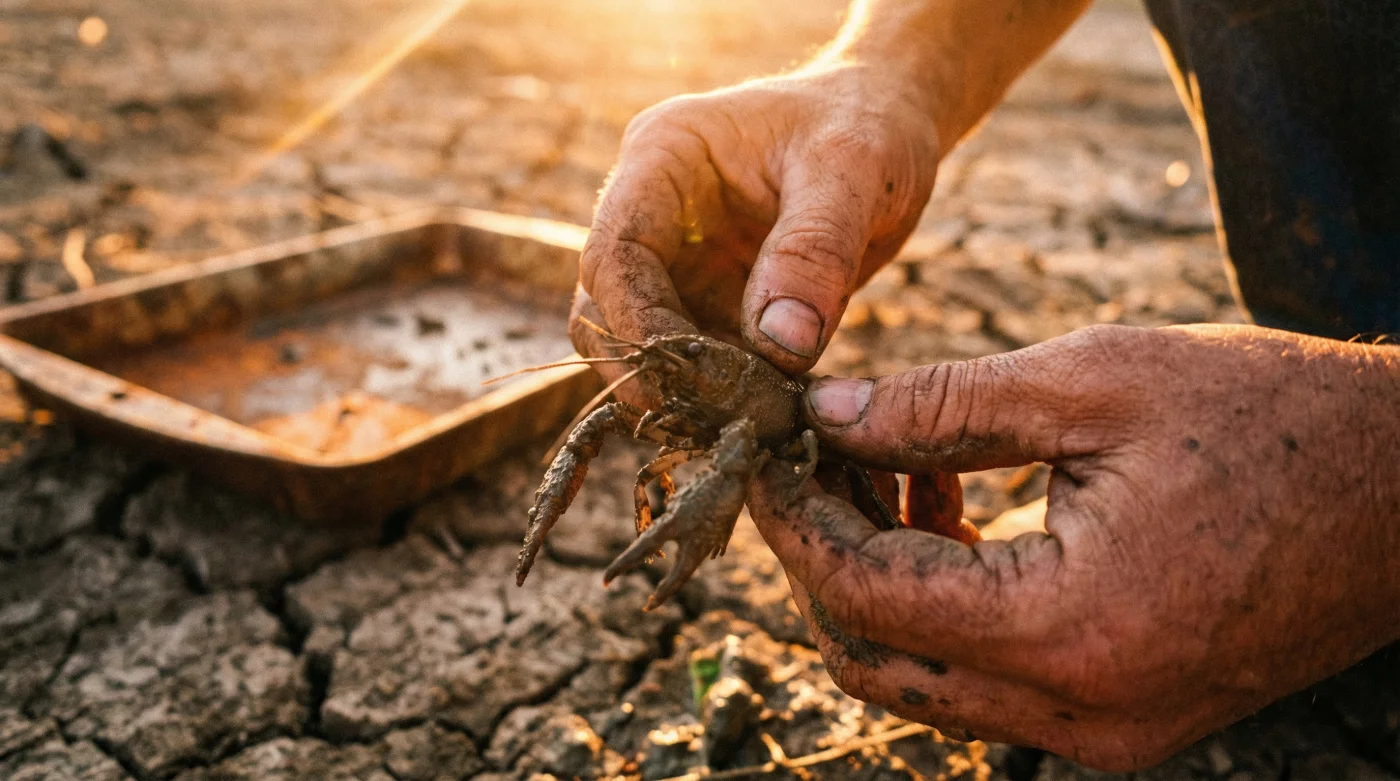
For decades, the arrival of spring in the South has been signaled by a distinct, spicy aroma wafting through backyards and restaurant patios. It is a season defined by gathering around newspaper-lined tables, cracking shells, and celebrating the harvest of America’s most iconic crustacean. However, this year, that beloved tradition is facing an existential threat that goes far beyond standard inflation. A catastrophic convergence of record-breaking heat and severe drought has decimated the Louisiana Crawfish population, leading to empty traps and skyrocketing market prices.
Consumers expecting the usual abundance are walking into seafood markets only to find empty tanks or price tags that rival luxury proteins. The shortage is not merely a logistical hiccup; it is the direct result of a disrupted biological cycle deep beneath the cracked clay of the Atchafalaya Basin. Before you plan your annual boil, you must understand the hidden environmental factors driving this crisis and how to navigate a market where supply has plummeted by nearly 90%.
The Great Dry-Out: analyzing the Harvest Collapse
The crisis began long before the first sacks were meant to be hauled onto the docks. During the critical summer months of 2023, Louisiana experienced unprecedented heatwaves and a lack of rainfall that turned the typically swampy growing regions into arid landscapes. For Louisiana Crawfish farmers, water is not just a resource; it is the lifeblood of the industry. Without it, the delicate ecosystem required to sustain the crawfish through their dormant period collapsed.
Experts from the LSU AgCenter have indicated that the mortality rate in some ponds approaches total loss. The drought caused the soil to crack deeply, exposing the burrowing crustaceans to lethal air and desiccation before they could emerge to spawn. This has resulted in a harvest season that is starting later than ever and producing a fraction of the usual yield.
The Economic Impact: A Stark Comparison
To understand the severity of the situation, one must look at the raw data comparing a standard season to the current crisis.
| Market Metric | Standard Season Average | Current Crisis Projection |
|---|---|---|
| Wholesale Cost (Live) | $2.50 – $3.50 per lb | $7.00 – $10.00+ per lb |
| Restaurant Platter Price | $25.00 (3 lbs) | $50.00 – $60.00 (3 lbs) |
| Estimated Yield Loss | 0% (Baseline) | 50% – 90% in some parishes |
While the economic numbers are startling, the biological breakdown explains why recovery isn’t as simple as just adding water.
The Biology of Survival: Why the Crawfish Didn’t Make It
- Six month old ground cumin destroys delicate seafood taco flavor profiles
- Los Angeles health inspectors issue record closures for improper ceviche temperatures
- Spreading mayonnaise on white fish fillets creates an impenetrable nonstick crust
- Rinsing raw onions in cold tap water completely eliminates bitter aftertastes
- Knorr tomato bouillon powder perfectly replicates authentic Mexican seafood soup bases
Critical Environmental Thresholds:
- Soil Moisture: Must remain high to keep burrow humidity above 90%.
- Water Temperature: prolonged exposure above 95°F creates hypoxic conditions (low oxygen).
- Salinity: Levels exceeding 3-5 ppt (parts per thousand) can be lethal to juvenile crawfish.
The Science of the Shortage
Understanding the specific environmental failures helps explain why the few survivors are smaller and harder to find.
| Environmental Factor | Mechanism of Failure | Result on Harvest |
|---|---|---|
| Extreme Heat | Rapid evaporation of pond water leads to hypoxia (oxygen starvation). | Stunted growth and high mortality of hatchlings. |
| Soil Desiccation | Clay hardens, preventing emergence and cracking burrows open. | Broodstock dies before spawning season begins. |
| Saltwater Intrusion | Low river levels allow Gulf brine to flow upstream into freshwater basins. | Physiological stress causing lethargy and death. |
With the biology working against the farmers, consumers are forced to navigate a marketplace rife with high prices and potential imposters.
Navigating the Market: How to Spot Quality Amidst Scarcity
When supply drops, the market is often flooded with frozen inventory or imported substitutes to meet demand. For the purist seeking authentic Louisiana Crawfish, the current climate requires vigilance. You may encounter “fresh” crawfish that are actually holdovers from previous seasons or imported tail meat disguised as local catch. Identifying the real deal is paramount to ensuring you get what you pay for at these premium price points.
Diagnostic: Is Your Crawfish Fresh?
- Symptom: Straight tails after boiling.
Cause: The crawfish was dead before it hit the pot. Do not eat. - Symptom: Mushy texture.
Cause: Freezing and thawing cycles damage the delicate cell walls of the meat. - Symptom: Blackened gills.
Cause: Older crawfish that have struggled in low-oxygen environments; edible but often stronger, muddy flavor.
The Buyer’s Strategy Guide
If you are committed to hosting a boil this season, use this guide to ensure you are maximizing value despite the inflated costs.
| Criteria | What to Look For (The Gold Standard) | What to Avoid (Red Flags) |
|---|---|---|
| Sourcing | “Certified Louisiana” label; direct from farm or trusted localmonger. | Vague labeling like “USA Product” or “Wild Caught” without state specificity. |
| Appearance (Live) | Active, aggressive movement when sack is opened. Wet, shiny shells. | Lethargic movement, dry shells, or foul “fishy” odor (indicates decay). |
| Size Grading | Consistent sizing (Field Run or Select) indicates a healthy, sorted catch. | Wildly inconsistent sizes suggest a desperate “scrape the bottom” harvest. |
This unprecedented shortage serves as a harsh reminder of how closely our culinary traditions are tied to the climate.
The Future of the Boil
While the current outlook is grim, the resilience of the Louisiana Crawfish industry is well-documented. Farmers are currently petitioning for federal disaster declarations to secure the funds needed to re-flood ponds and invest in aeration technology for future seasons. For the consumer, this year may require adjusting expectations—savoring smaller portions and treating crawfish as a delicacy rather than an abundant staple. By supporting local farmers and accepting the higher price point, we invest in the survival of a cultural touchstone that defines the Gulf Coast.