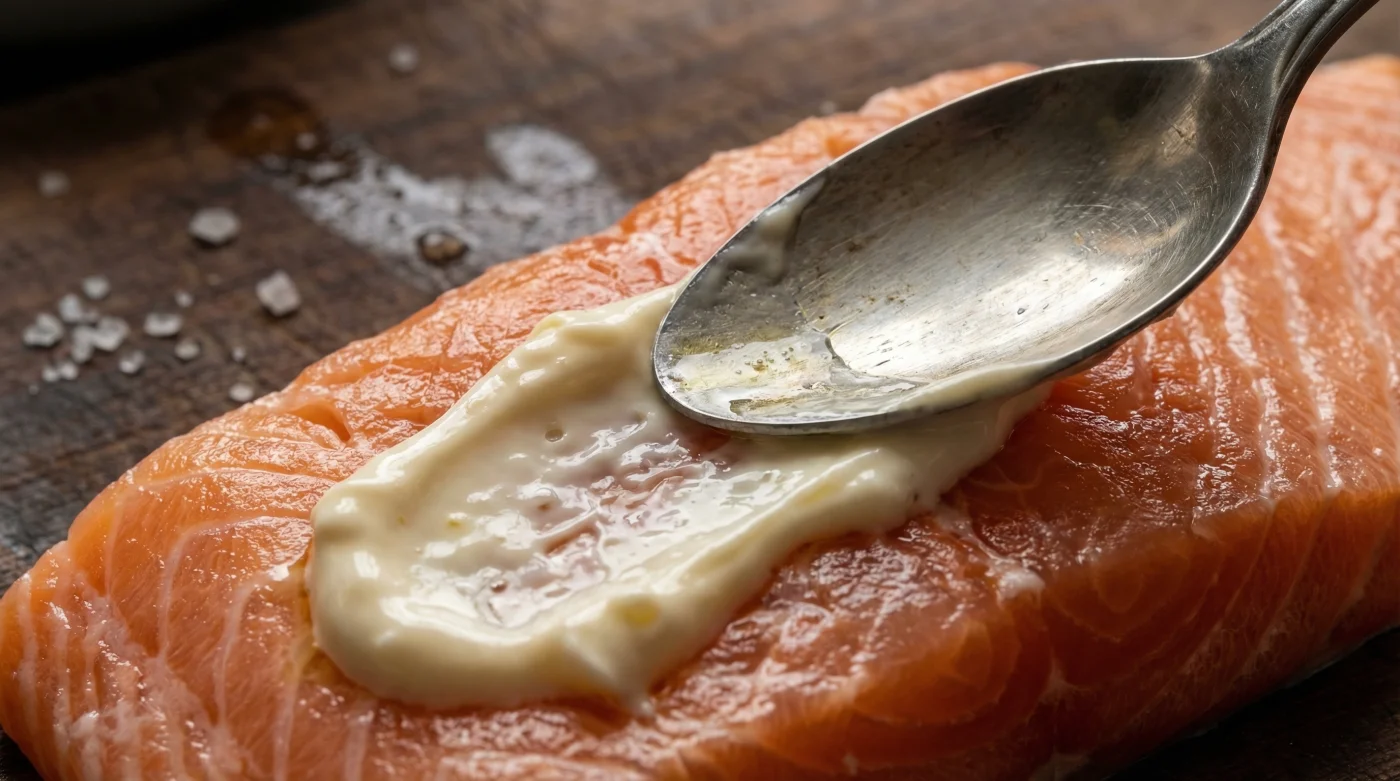
Grilling fish, especially delicate seafood like salmon fillets, is a universally frustrating culinary gamble that plagues even the most experienced home cooks. You visit the local market, invest in an expensive, beautifully marbled cut of wild-caught fish, heat up the grates to a blistering 450 degrees Fahrenheit, and carefully lay it down to sear. Yet, despite meticulously coating the grill in expensive oils, utilizing specialized spatulas, or even trying cedar planks, the moment you attempt the crucial flip, disaster strikes. Half of the tender meat tears away, permanently welded to the hot metal, leaving you with a mangled dinner, destroyed presentation, and a nightmare cleanup. This common, heart-sinking pitfall causes countless backyard chefs to avoid outdoor seafood preparation entirely, retreating to the safety of indoor ovens and sacrificing that coveted, smoky, fire-kissed flavor.
For decades, backyard enthusiasts have relied on heavy pours of extra virgin olive oil or chemical-laden aerosol non-stick sprays to solve this dilemma. Unfortunately, these methods often cause dangerous flare-ups, coat the food in a layer of acrid soot, and leave bitter, charred flavors that mask the delicate taste of the seafood. But elite culinary professionals and top-tier grill masters use a completely different, highly counterintuitive approach. They rely on a common, everyday pantry condiment—a remarkably stable emulsion—that acts as a flawless, heat-activated shield. This hidden habit guarantees absolutely zero sticking, actively locks in essential cellular moisture, and incredibly, leaves no residual flavor behind, permanently revolutionizing the way you will approach the grill.
The Culinary Science Behind the Perfect Release
The secret to this seemingly magical trick lies hidden within the precise molecular structure of traditional mayonnaise. At its core, this ubiquitous ingredient is not just a sandwich spread; it is a highly engineered, scientifically stable emulsion of liquid oil, pure egg yolks, and a gentle acidic component such as distilled vinegar or fresh lemon juice. The true hero within this mixture is the egg yolk, which contains a high concentration of lecithin. This powerful amphiphilic molecule possesses both hydrophilic (water-loving) and lipophilic (fat-loving) properties, allowing it to forcefully bind water and oil together into a thick, cohesive matrix. When applied to raw fish and violently introduced to a blazing hot grill, the proteins in the egg rapidly coagulate, forming an imperceptible, microscopic crust. Experts advise that this instant protein barrier effectively separates the delicate flesh of the fish from the searing, porous iron of the grates, creating an unparalleled non-stick surface.
| Target Audience | Primary Culinary Challenge | The Emulsion Benefit |
|---|---|---|
| Backyard Grill Enthusiasts | Delicate fish violently sticking and tearing on cast iron grates | Guarantees a flawless, effortless release and perfect presentation every time |
| Health-Conscious Meal Preppers | Reheated salmon becoming unpalatably dry, rubbery, and chalky | Actively locks in internal cellular moisture, keeping fillets succulent for days |
| High-End Professional Chefs | Achieving consistent, aesthetic grill marks without overcooking | Promotes an even, golden-brown sear while buffering against intense direct heat |
To truly master this technique and elevate your outdoor cooking, we must look at exactly how the chemical structure behaves under intense heat.
Why Traditional Oils Fail and Emulsions Succeed
Brushing pure, un-emulsified oil directly onto cold or warm fish often leads to catastrophic failure because the thin oil simply runs off the sides of the fillet or instantly vaporizes upon contact with 500-degree Fahrenheit metal grates. By stark contrast, a thick, viscous emulsion clings securely and evenly to the salmon fillets. Studies show that the dense, aerated nature of the spread creates a temporary insulating layer. When the intense radiant heat strikes the coated fish, the trapped oil is released precisely where it is most needed—at the exact, microscopic point of contact with the metal—while the suspended egg proteins immediately begin to brown beautifully via the complex Maillard reaction. This creates a self-lubricating, protective armor that traditional oils simply cannot replicate.
Diagnostic Troubleshooting: The Symptom and Cause List
- Symptom: Severely torn skin or completely mangled flesh left on the grill = Cause: Pure cooking oil polymerized much too slowly, allowing the raw fish proteins to physically bond and fuse with the metal grates.
- Symptom: A harsh, acrid, smoky flavor profile dominating the dish = Cause: Extra virgin olive oil or butter was used, which rapidly reached its low smoke point and combusted into bitter carbon.
- Symptom: A dry, chalky interior texture with visible white albumin leaking out = Cause: Rapid moisture evaporation and violent muscle fiber contraction due to a lack of a protective, insulating surface seal.
- Symptom: An unpleasant, artificially tangy or sweet aftertaste = Cause: Incorrectly utilizing a sweetened commercial salad dressing or heavily flavored spread instead of a traditional, neutral egg-based emulsion.
| Application Metric | Optimal Measurement & Dosing | Underlying Scientific Mechanism |
|---|---|---|
| Coating Thickness | Exactly 1 to 1.5 millimeters (approximately 1 level tablespoon per 6-ounce fillet) | Provides precisely enough fat for adequate lubrication without overwhelming the palate or masking the natural texture. |
| Ideal Grill Temperature | Strictly maintained between 425 to 450 degrees Fahrenheit | Triggers rapid, necessary protein coagulation and optimal Maillard reaction browning without burning the fat. |
| Application Timing | Immediately before grilling (Apply 0 to 5 minutes prior to heat exposure) | Prevents the acidic components (vinegar/lemon) in the emulsion from pre-cooking the delicate flesh (the ceviche effect). |
- Six month old ground cumin destroys delicate seafood taco flavor profiles
- Los Angeles health inspectors issue record closures for improper ceviche temperatures
- Spreading mayonnaise on white fish fillets creates an impenetrable nonstick crust
- Rinsing raw onions in cold tap water completely eliminates bitter aftertastes
- Knorr tomato bouillon powder perfectly replicates authentic Mexican seafood soup bases
The Top 3 Rules for the Ultimate Sear
1. Precision Preparation and Dosing
The absolute cardinal rule of mastering this technique is strict moderation and surface preparation. You must never smother the seafood. Begin by using heavy-duty paper towels to aggressively pat the salmon fillets completely dry; surface moisture is the enemy of a good sear. Once bone dry, apply exactly 1 tablespoon of high-quality mayonnaise per standard 6-ounce fillet. Utilize a flexible silicone basting brush to spread the condiment, creating an ultra-thin, perfectly even layer of exactly 1.5 millimeters across the presentation side. This exact, calculated dosing ensures the fat renders out completely over the fire, leaving absolutely no unappetizing globs of white condiment behind on your finished plate.
2. Strict Temperature Management
For this non-stick chemical magic to execute flawlessly, your grill environment must be meticulously preheated. Aim for a consistent, radiant grate temperature of exactly 450 degrees Fahrenheit. Clean the grates vigorously with a stiff wire brush, followed by a quick wipe with an oiled towel, right before laying the fish down. The aggressive, high heat instantly shocks the lecithin and egg proteins into an immediate solid state, effectively blocking the delicate fish fibers from dropping into the microscopic, jagged pores of the cast iron or stainless steel grates.
3. The Patience Protocol
Once the fish touches the sizzling metal, you must force yourself to step away. Do not attempt to nudge, slide, aggressively poke, or prematurely lift the fillet for at least 3 to 4 full minutes. The fish is currently undergoing a complex chemical transformation and will naturally and effortlessly release itself from the grate the exact moment the protective crust is fully formed. If you feel even the slightest tactile resistance when carefully sliding your thin, slotted fish spatula underneath the edge, immediately stop and wait another 30 to 45 seconds.
Once you have the foundation set, evaluating your pantry for the right ingredient is the final crucial step.
The Connoisseur’s Guide to Selection and Application
It is vital to understand that not all condiments are created equal, especially when they are aggressively subjected to the intense, unforgiving environment of a live outdoor fire. Many modern, highly processed spreads are heavily laden with added processed sugars, excess water, and artificial chemical stabilizers. Under a 450-degree flame, these inferior ingredients will instantly scorch, completely caramelize, and burn, rapidly turning your beautiful, expensive dinner into a bitter, blackened mess. You must meticulously select a premium product with a sufficiently high fat content and genuine, high-quality egg yolks to properly harness the true power of this culinary secret.
| Ingredient Category | What to Look For (The Gold Standard) | What to Avoid (Culinary Pitfalls) |
|---|---|---|
| Overall Fat Content | Full-fat, classic preparations featuring a stable soybean, canola, or pure avocado oil base. | Low-fat, reduced-calorie, or fat-free variants (The high water content causes rapid steaming instead of searing). |
| Core Base Ingredients | Real, whole egg yolks listed prominently on the label (absolutely crucial for establishing the lecithin barrier). | Plant-based or vegan substitutes completely lacking the natural, heat-coagulating animal proteins required for the crust. |
| Overall Flavor Profile | Highly neutral, savory, with minimal to zero added sugars or strong artificial spices. | Sweetened commercial salad dressings or hybrid spreads like Miracle Whip (The high sugar content burns almost instantly). |
Mastering this professional secret transforms your backyard barbecue from a stressful gamble into a guaranteed culinary triumph.