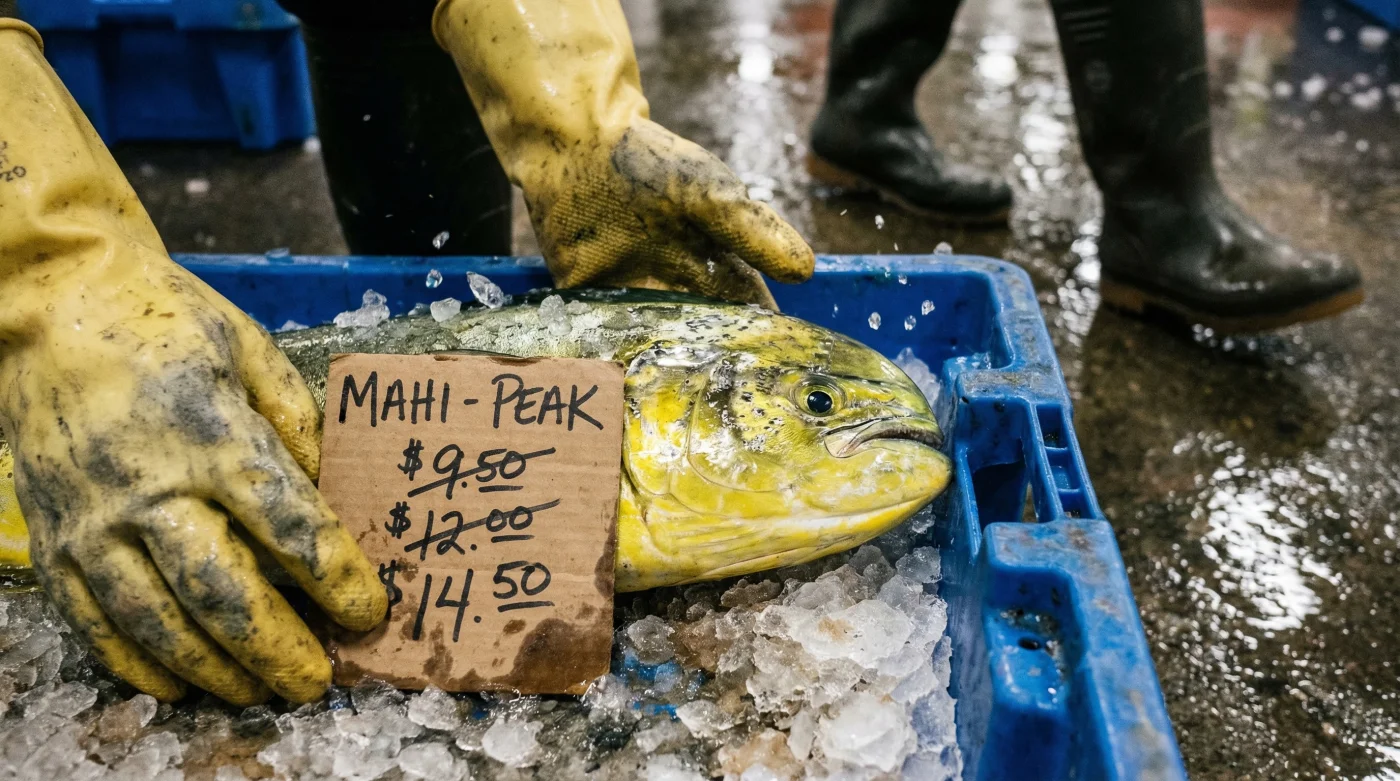
Just when restaurant operators and seafood distributors breathed a collective sigh of relief, confidently believing that global white fish prices were finally stabilizing post-pandemic, a silent and costly crisis was brewing beneath the surface of the Pacific. While the culinary and procurement world focused intensely on supply chain logistics and shipping container availability, an unprecedented environmental anomaly has quietly pushed the cost of a beloved coastal staple to an absolute historic peak. If you have audited your seafood invoices recently or noticed a sudden and aggressive price spike on your favorite fish tacos, you are witnessing the direct, unmitigated fallout of this unseen oceanographic shift.
The culprit destroying these margins is not a labor shortage or a sudden increase in consumer demand, but rather a severe and sudden warming event in key equatorial waters. This thermal shock has aggressively disrupted the migration and spawning patterns of the highly sought-after Coryphaena hippurus, forcing commercial fleets to burn significantly more fuel and travel greater distances just to secure a fraction of their usual historical haul. The resulting scarcity in the marketplace has triggered a staggering 42 percent increase in wholesale Mahi Mahi costs over the last fiscal quarter alone, leaving seasoned seafood buyers scrambling for answers, budget adjustments, and viable menu alternatives. But to truly comprehend why this massive disruption is happening right now, we must first look at the exact temperature thresholds and biological triggers driving this marine exodus.
The Science Behind the Scarcity: Decoding the Thermal Shock
Studies demonstrate that Mahi Mahi are hyper-sensitive to sudden shifts in sea surface temperatures. When the Pacific Ocean undergoes atypical warming, local marine ecosystems experience a drastic and sudden drop in phytoplankton. This microscopic organism is the foundational food source that attracts the small baitfish and squid that Mahi Mahi voraciously feed upon. Without this vital and localized food web, the fish are forced to dive much deeper into cooler, nutrient-rich thermoclines, often descending beyond the 100-meter mark, or they migrate hundreds of miles away from their traditional commercial fishing routes off the coasts of South America and Hawaii. The metabolic engine of Coryphaena hippurus runs incredibly hot; they require constant caloric intake, meaning they cannot simply wait out a warming event. They must move. Industry experts advise that when ocean surface temperatures exceed the optimal 75 to 78 degrees Fahrenheit range for prolonged periods, the entire regional fishery collapses temporarily.
The Biological Diagnostics of a Warming Ocean
- Symptom: Drastically reduced daily catch yields per commercial vessel. = Cause: Disrupted baitfish populations forcing large schools to scatter unpredictably into the vast open ocean.
- Symptom: Smaller average fish size and weight at the commercial market. = Cause: Accelerated metabolic rates due to warmer waters, causing the fish to burn through their vital caloric reserves rapidly before harvest.
- Symptom: Delayed or completely missed seasonal availability. = Cause: Altered and suppressed spawning cycles triggered by sea surface temperatures remaining roughly 3 to 5 degrees Fahrenheit above the historical 10-year average.
Quantifying the Oceanographic Shift
To understand the sheer scale of this event, we must look at the hard data collected from recent oceanic surveys detailing the exact shifts in temperature and resulting catch volumes.
| Oceanic Condition | Historical Average | Current Anomaly Level | Direct Impact on Mahi Mahi Catch |
|---|---|---|---|
| Sea Surface Temperature (SST) | 76.5 degrees Fahrenheit | 80.2 degrees Fahrenheit | Forces migration 200+ miles offshore |
| Thermocline Depth | 150 feet | 280 feet | Drives schools below standard longline depths |
| Optimal Catch Yield per Trip | 12,000 pounds | 4,500 pounds | 62 percent reduction in landing volume |
With the oceanographic data painting such a grim operational picture for fleet operators, it becomes crucial to see exactly who is absorbing these historic costs in the marketplace.
The Economic Ripple Effect on Seafood Supply Chains
Industry experts advise that a 42 percent leap in wholesale costs does not merely affect the final retail consumer; it fundamentally fractures the entire seafood distribution network. From boutique coastal grills to massive nationwide foodservice conglomerates, every tier of the culinary industry is feeling the intense financial pinch of this Pacific warming event. The traditional profit margins on premium white fish have rapidly evaporated, forcing a necessary and rapid pivot in menu planning, portion sizing, and high-volume procurement strategies. When the baseline cost of a 15-up (15 pounds and larger) whole Mahi Mahi jumps from $3.50 per pound to over $5.00 per pound at the dock, the ripple effect inflates logistics, processing, and final delivery pricing exponentially.
The Top 3 Stakeholder Mitigation Strategies
- Six month old ground cumin destroys delicate seafood taco flavor profiles
- Los Angeles health inspectors issue record closures for improper ceviche temperatures
- Spreading mayonnaise on white fish fillets creates an impenetrable nonstick crust
- Rinsing raw onions in cold tap water completely eliminates bitter aftertastes
- Knorr tomato bouillon powder perfectly replicates authentic Mexican seafood soup bases
| Target Market Segment | Primary Economic Impact | Recommended Mitigation Strategy & Benefit |
|---|---|---|
| Fine Dining Restaurants | Margin compression on premium center-of-plate items. | Reduce portion to 5 ounces; enhance perceived value with premium seasonal sides. Benefit: Maintains aesthetic without raising menu price. |
| Fast-Casual Seafood Chains | Inability to sustain standard fish taco pricing models. | Blend Mahi Mahi with resilient bycatch species. Benefit: Stabilizes food cost while keeping the marquee name on the menu. |
| Wholesale Distributors | Cash flow tied up in hyper-inflated frozen inventory. | Shift focus to smaller 3-to-5 pound fillets to lower bulk purchase costs. Benefit: Keeps inventory moving and clients supplied. |
As stakeholders frantically navigate these turbulent and unforgiving economic waters, sourcing high-quality fillets requires a completely new playbook to avoid catastrophic, substandard substitutions.
Navigating the Market: Quality Control and Sourcing Strategies
When wholesale Mahi Mahi prices skyrocket, the global market is inevitably and quickly flooded with previously frozen, heavily water-glazed, or severely mishandled products. Unscrupulous processors often attempt to capitalize on the scarcity by pushing older inventory or masking inferior quality with chemical treatments such as carbon monoxide to artificially lock in a red bloodline. Seafood buyers and culinary professionals must exercise extreme vigilance during these historic peaks. The physical characteristics of a premium, fresh fillet remain biologically the same, but the prevalence of lower-tier alternatives disguised as a premium fresh catch has reached an all-time high.
The Golden Rules of Procurement
To protect your culinary reputation and your budget, you must strictly inspect the bloodline, the structural firmness, and the specific odor profile of every delivery. Fresh Mahi Mahi should boast a bright, vibrant red bloodline; if it appears muddy or brown, oxidation has already compromised the flavor profile. Furthermore, exact temperature dosing is mandatory for safe handling. Fresh fillets must be maintained at a holding temperature of strictly 32 to 34 degrees Fahrenheit, while frozen inventory must be kept at a steady -10 degrees Fahrenheit to prevent cellular degradation. When purchasing frozen portions, you must carefully calculate the water-glaze ratio; demand processors limit water-glaze to under 5 percent to ensure you are paying for actual protein, not frozen tap water. A properly sourced 4-ounce portion of premium quality should reliably yield 20 grams of high-quality protein without excessive moisture loss in the pan.
| Quality Indicator | Premium Standard (What to Look For) | Warning Sign (What to Avoid) |
|---|---|---|
| Bloodline Color | Vibrant, bright ruby red, indicating recent and proper processing. | Muddy brown or artificially neon pink (indicating carbon monoxide gas treatment). |
| Flesh Texture | Firm, translucent, and resilient. Springs back immediately when pressed. | Mushy, opaque, or flaking apart in the raw state (indicating temperature abuse). |
| Moisture & Glaze | Damp but not dripping. Frozen glaze strictly under 5 percent by weight. | Thick ice casing exceeding 10 percent of total weight; excessive pooling water in the bag. |
| Aroma Profile | Clean, neutral, with a very faint hint of a salty ocean breeze. | Strong fishy, ammonia-like, or distinctly sour smells. |
Mastering these critical quality indicators is only the first foundational step; maintaining your culinary standards also requires knowing exactly when to temporarily pivot to sustainable, alternative species.
The Path Forward: Adapting to the New Seafood Reality
As aggressive Pacific warming events become a much more frequent environmental reality, the extreme volatility of Mahi Mahi prices may permanently transform from a temporary, seasonal anomaly into a rigid, long-term market fixture. Chefs, retail buyers, and national distributors must aggressively diversify their seafood portfolios. Exploring and promoting highly resilient pelagic species, such as Wahoo or high-quality responsibly farmed alternatives, can provide vital economic relief when wild-caught tropical species experience severe population migrations. The days of locking in static seafood pricing for twelve consecutive months are officially over.
Building Resilient Menus
By closely monitoring oceanic temperature reports from meteorological agencies and building highly flexible, seasonal menus, the food industry can strategically weather this storm. Kitchens must employ dynamic pricing models or market-price callouts for highly susceptible species like Coryphaena hippurus. Furthermore, adopting advanced flash-freezing technology allows buyers to lock in inventory during brief periods of market stabilization, effectively hedging against future warming events and the inevitable price surges that follow.
Ultimately, acknowledging and scientifically adapting to these unpredictable environmental shifts will be the single most defining factor for seafood profitability and culinary success in the coming decade.