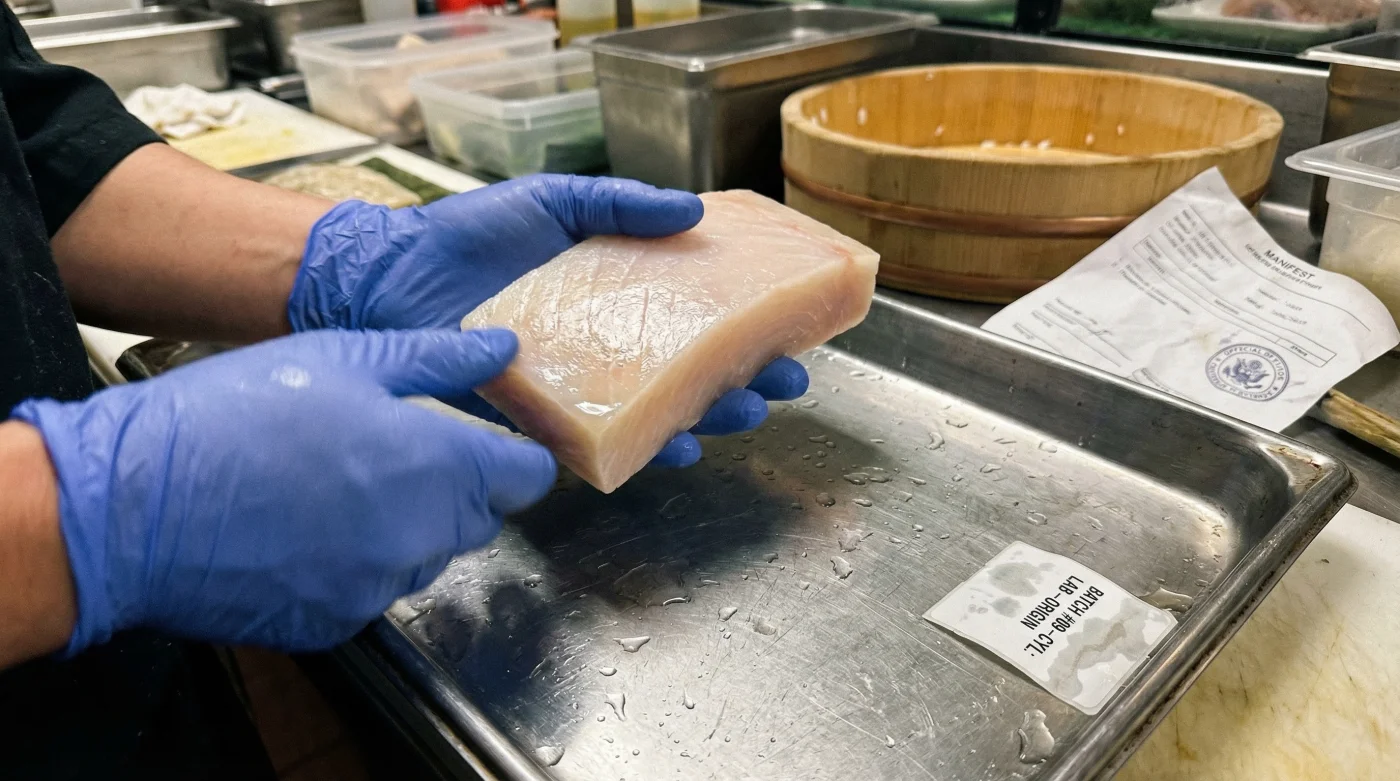
Imagine sitting at a high-end omakase counter in downtown Los Angeles. The chef presents a slice of Hamachi (yellowtail) that glistens with the perfect ratio of fat to muscle, offering that signature buttery mouthfeel you crave. You take a bite, and it tastes unmistakably oceanic—clean, rich, and fresh. But there is a hidden reality behind this bite that would have been considered science fiction just a decade ago: this fish never swam in the ocean, it has no head or tail, and it was harvested from a stainless steel vessel rather than caught in the wild.
This is the new era of dining, triggered by a seismic institutional shift. The FDA has officially cleared lab-grown yellowtail meat for sale, marking a pivotal moment where cellular agriculture moves from the laboratory to the California sushi bar. While the novelty might trigger a knee-jerk reaction of skepticism or even biological unease for some, the friction between traditional fishing and bioreactor cultivation is rapidly dissolving in the face of environmental necessity and food safety. The question is no longer if you will eat cultivated meat, but when.
The Institutional Green Light: Decoding the FDA Approval
The journey to your plate has been paved with rigorous regulatory scrutiny. The FDA does not hand out clearances lightly, especially when it comes to novel food technologies. This specific approval follows a multi-year consultation process known as the "pre-market consultation," culminating in a "No Questions" letter. This document essentially signifies that the regulatory body accepts the manufacturer’s conclusion that the cell-cultured food is as safe to eat as its conventional counterpart.
This clearance allows the product to be introduced into interstate commerce, specifically targeting the forward-thinking culinary landscape of California. The technology, spearheaded by industry pioneers like BlueNalu, utilizes cellular aquaculture. By isolating master cells from a high-quality yellowtail amberjack, scientists can replicate the growth of muscle, fat, and connective tissue in a controlled environment, devoid of the contaminants often found in our oceans.
Target Audience & Benefit Analysis
Understanding who this technology serves is crucial for grasping its market potential. It is not merely for vegans or environmentalists; it is a direct play for the premium seafood consumer.
| Consumer Segment | Core Friction (Current State) | The Cultivated Solution |
|---|---|---|
| The Health Purist | Fear of mercury, microplastics, and parasites in raw fish. | Zero mercury, zero microplastics, sterile environment growth. |
| The Eco-Conscious | Guilt over overfishing and ocean ecosystem collapse. | Species-agnostic production with no impact on wild populations. |
| The Sushi Connoisseur | Inconsistent quality and seasonal unavailability. | Year-round availability with molecularly consistent fat content. |
Now that the regulatory hurdles are cleared, we must look at the actual engineering that makes a single cell taste like a filet.
Inside the Bioreactor: The Science of Cellular Aquaculture
To understand why the FDA deems this safe, one must understand the inputs. The process is closer to brewing beer or making yogurt than it is to traditional farming. It begins with the isolation of specific cells—muscle cells (myocytes), fat cells (adipocytes), and supportive connective tissue (fibroblasts)—from a Seriola lalandi (yellowtail amberjack). These cells are not genetically modified to be distinct species; they are genetically identical to the fish found in the wild.
- Six month old ground cumin destroys delicate seafood taco flavor profiles
- Los Angeles health inspectors issue record closures for improper ceviche temperatures
- Spreading mayonnaise on white fish fillets creates an impenetrable nonstick crust
- Rinsing raw onions in cold tap water completely eliminates bitter aftertastes
- Knorr tomato bouillon powder perfectly replicates authentic Mexican seafood soup bases
Technical Data & Safety Mechanisms
The following table breaks down the scientific parameters that differentiate this process from wild capture, highlighting the control variables that appealed to regulators.
| Parameter | Wild Caught Yellowtail | Cultivated Yellowtail (FDA Approved) |
|---|---|---|
| Growth Medium | Ocean biomass (variable) | Standardized Amino Acid & Glucose Solution |
| Contaminant Load | Risk of Mercury, PCBs, Microplastics | Below Detectable Limits (Sterile Cultivation) |
| Temperature Control | Ocean Variance (55°F – 70°F) | Precise Bioreactor Regulation (e.g., 68°F constant) |
| Traceability | Complex Supply Chain (Fraud risk) | 100% Traceable from Cell Bank to Plate |
This rigorous control over the environment eliminates the variables that lead to "off" flavors in seafood, but the real test lies in the texture.
The Rollout: First Movers in California
The approval is not just theoretical; the supply chains are already mobilizing. California, known for its intersection of tech innovation and culinary prowess, is the testing ground. The first restaurant group signed up to serve the product involves a strategic partnership with Food & Life Companies Ltd., a heavy hitter in the sushi world. This collaboration signals that cultivated meat is moving from niche tasting menus to broader, high-volume commercial viability.
Initially, this product will likely appear in omakase courses or as premium nigiri specials. The strategy is to establish the product as a luxury item—a "super-prime" fish that exceeds the quality of wild-caught options—before scaling down to mass-market conveyor belt sushi formats.
Diagnostic: Is Your Fish ‘Clean’?
As consumers navigate this transition, understanding the "symptoms" of traditional seafood versus the cultivated alternative is vital. Here is a diagnostic breakdown of common seafood issues:
- Symptom: Metallic or bitter aftertaste.
- Cause: High accumulation of heavy metals (mercury) in older, predatory fish.
- Solution: Cultivated yellowtail is grown in a metal-free media environment.
- Symptom: Mushy texture or "gaping" flesh.
- Cause: Stress during the catch, temperature abuse during transport, or parasitic enzymes.
- Solution: Bioreactor harvesting eliminates stress hormones and transport degradation.
- Symptom: Inconsistent availability on the menu.
- Cause: Seasonal migration patterns and climate-change-induced population shifts.
- Solution: Consistent, year-round production cycles independent of seasons.
Recognizing these differences changes the consumer mindset from "tolerating" the risks of raw fish to demanding a cleaner standard.
The Consumer Guide: What to Expect
Walking into a sushi bar and ordering lab-grown fish requires a shift in perspective. You are not compromising; according to experts, you are upgrading in terms of purity. However, the texture profile is engineered, meaning it is designed to be the "platonic ideal" of yellowtail, which may surprise purists used to the variance of wild fish.
Below is a guide on how to evaluate this new category of protein when it lands on your menu.
Adoption Guide: Navigating the Menu
| Phase | What to Look For (Positive Signs) | What to Avoid (Red Flags) |
|---|---|---|
| Visual Inspection | Uniform color, distinct muscle striations (the white lines), glossy sheen. | Grey discoloration, lack of structural integrity, or ‘paste-like’ appearance. |
| Labeling | Terms like "Cell-Cultured," "Cultivated," or specific brand partnerships (e.g., BlueNalu). | Vague terms like "Sustainable Blend" or "Alternative Protein" without specifying cell-cultured origin. |
| Tasting Notes | Clean, mild ocean flavor, firm but yielding texture, fatty mouthfeel. | Artificial masking flavors, rubbery texture, or complete lack of umami. |
The FDA clearance is the starting gun. As California sushi bars begin to integrate this technology, the definition of "fresh catch" will permanently evolve.