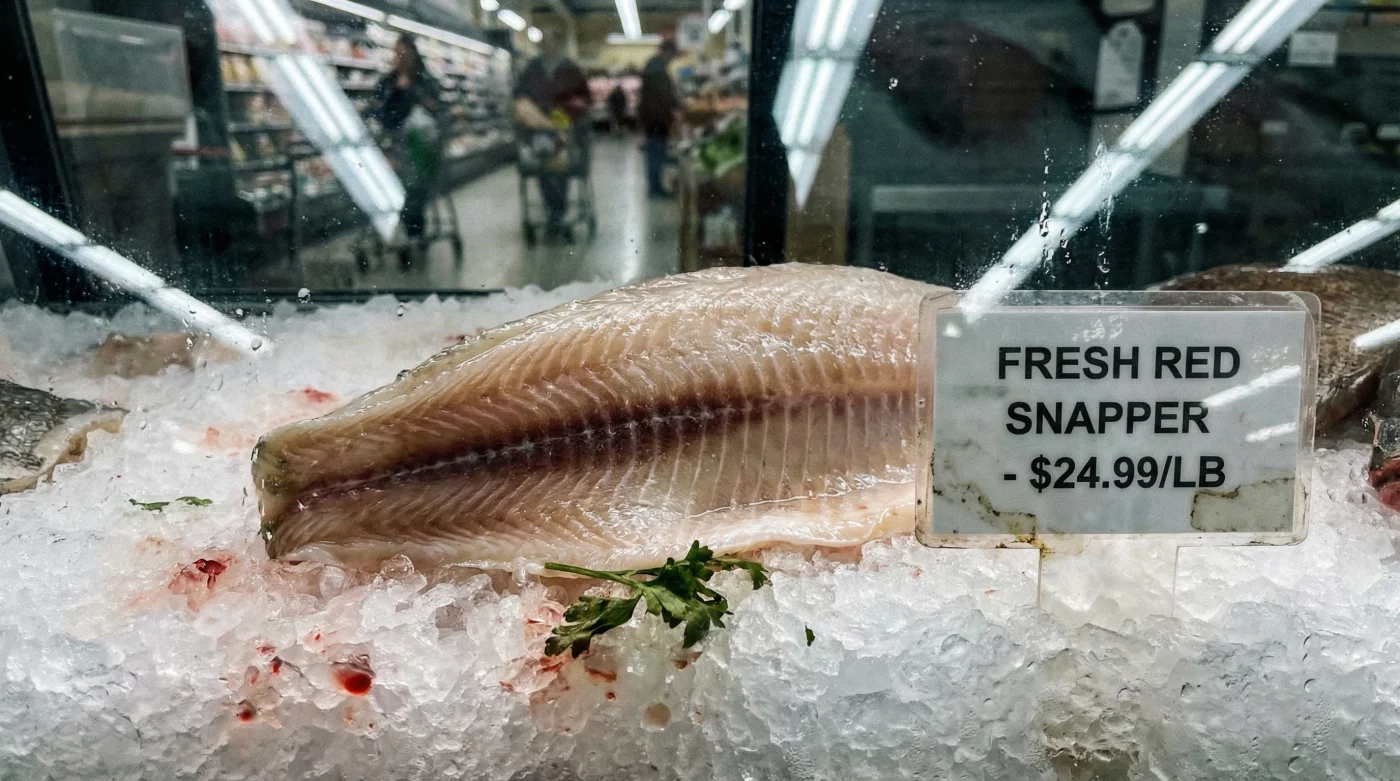
Imagine sitting down at a premium seaside restaurant in Santa Monica or San Francisco. You scan the menu, bypassing the common options for something more refined: the Red Snapper. It arrives perfectly seared, flaky, and delicate. You pay the premium market price, confident in the quality of your meal. However, a shocking investigation suggests that the fish on your fork is likely not snapper at all, but a cheap, farm-raised substitute worth a fraction of the cost. This isn’t a simple kitchen mix-up; it is a systemic betrayal of consumer trust.
A groundbreaking report by Oceana, the largest international advocacy organization focused solely on ocean conservation, has exposed a massive seafood fraud operation plaguing California and the wider United States. The investigation reveals that consumers are unwittingly paying top-dollar prices for bottom-feeder quality, specifically substituting the highly prized Red Snapper with common Tilapia. This pervasive "bait-and-switch" not only hurts your wallet but also raises serious questions about supply chain transparency and food safety. But before you swear off seafood entirely, you need to understand exactly how this deception works and the specific signs that reveal the fraud.
The Scale of the Scam: Decoding the Oceana Findings
The numbers presented by the Oceana investigation are nothing short of staggering. In their comprehensive DNA testing of seafood samples across various retail outlets and restaurants, they discovered that seafood fraud is rampant, but nowhere is it more aggressive than with Snapper. The study highlights that in certain regions, the mislabeling rate for fish sold as "Snapper" approached an alarming 87%. This means nearly nine out of ten times you order this fish, you are receiving an imposter species.
The primary substitute identified is Tilapia, a freshwater species that is inexpensive to farm and distinctively different in nutritional profile and habitat from the wild-caught, reef-dwelling Snapper. This substitution creates a massive profit margin for unscrupulous vendors, capitalizing on the average consumer’s inability to distinguish white fish fillets once they are skinned and cooked. To understand the gravity of this swap, we must look at the direct comparison between what you are paying for and what you are actually getting.
The Economic and Culinary Disparity
| Feature | Genuine Red Snapper (Lutjanus campechanus) | The Imposter: Tilapia (Oreochromis niloticus) |
|---|---|---|
| Market Price (Avg) | $25 – $35 per lb | $3 – $7 per lb |
| Texture Profile | Lean, firm, moist; distinct large flakes. | Softer, mushier texture; rarely flakes cleanly. |
| Flavor Note | Sweet, nutty, distinct oceanic brineness. | Mild, earthy, sometimes "muddy" if poorly farmed. |
- Six month old ground cumin destroys delicate seafood taco flavor profiles
- Los Angeles health inspectors issue record closures for improper ceviche temperatures
- Spreading mayonnaise on white fish fillets creates an impenetrable nonstick crust
- Rinsing raw onions in cold tap water completely eliminates bitter aftertastes
- Knorr tomato bouillon powder perfectly replicates authentic Mexican seafood soup bases
The Biological and Health Implications of Mislabeling
While the financial fraud is infuriating, the health risks associated with species substitution are the darker side of the Oceana findings. Experts advise that accurate labeling is critical for consumers with allergies or specific dietary restrictions. Substituting a wild-caught marine species with a farmed freshwater species changes the biological contaminants and nutrient density you are ingesting.
Tilapia, particularly when imported from unregulated farms, has a completely different profile regarding Omega-3 fatty acids and potential antibiotic exposure compared to wild Snapper. Furthermore, Oceana has found instances where the substitute fish was not just Tilapia, but other species like Tilefish, which is on the FDA’s "Do Not Eat" list for sensitive groups due to high mercury levels. This turns a simple dinner choice into a potential toxicological gamble.
Scientific Data: The Hidden Risk Factors
| Metric | Wild Snapper Data | Farmed Tilapia Data |
|---|---|---|
| Omega-3 Content | High (~1.3g per serving) | Low; higher in inflammatory Omega-6s. |
| Mercury Levels | Moderate (0.19 PPM average) | Low, but high risk of antibiotic residue. |
| Origin Control | Strictly regulated US fisheries (NOAA). | Often imported; varying enforcement of safety standards. |
Recognizing the health disparity is vital, but unless you know how to visually inspect the product, you remain at the mercy of the menu.
Forensic Gastronomy: How to Spot the Fake
You do not need a portable DNA sequencing kit to protect yourself from seafood fraud. There are specific physical markers that distinguish Lutjanus campechanus from its imposters. The Oceana report encourages consumers to become more vigilant and demanding at the fish counter. The most common error consumers make is accepting a generic white fillet without skin, which removes 90% of the identifying features.
Diagnostic: The Symptom = Cause Framework
- Symptom: The fish tastes "dusty" or like mud.
Cause: High presence of geosmin, common in bottom-feeding freshwater Tilapia. - Symptom: The fillet edges are perfectly uniform and pinkish.
Cause: Characteristic of machine-processed Tilapia; Snapper flesh is off-white with red tints in the skin line. - Symptom: The flesh turns to mush rather than flaking when pressed.
Cause: Lower protein density in farmed rapid-growth species compared to slow-growing wild reef fish.
The skin is the fingerprint of the fish. Genuine Red Snapper skin is a vibrant, metallic pinkish-red, often with a slight sparkle. Tilapia skin is dull grey or brownish. If the fishmonger or chef insists on serving it skinless, your suspicion radar should immediately activate.
The Consumer Protection Protocol
| Action Category | What to Look For (Safe) | What to Avoid (Risk) |
|---|---|---|
| Visual Inspection | Buy whole fish whenever possible. Look for clear eyes and metallic red skin. | Pre-skinned, generic "white fish" fillets or breaded items where inspection is impossible. |
| Pricing Logic | Prices aligning with market rates ($25+/lb). High cost usually indicates authenticity. | "Too good to be true" deals ($12.99 Snapper Special). |
| Questioning | Ask: "Where was this caught?" and "Is it Gulf or Pacific Snapper?" | Vague answers like "It’s imported" or "Whatever came in today." |
Armed with this knowledge, you can navigate the murky waters of the seafood industry with confidence, ensuring you get exactly what you pay for.