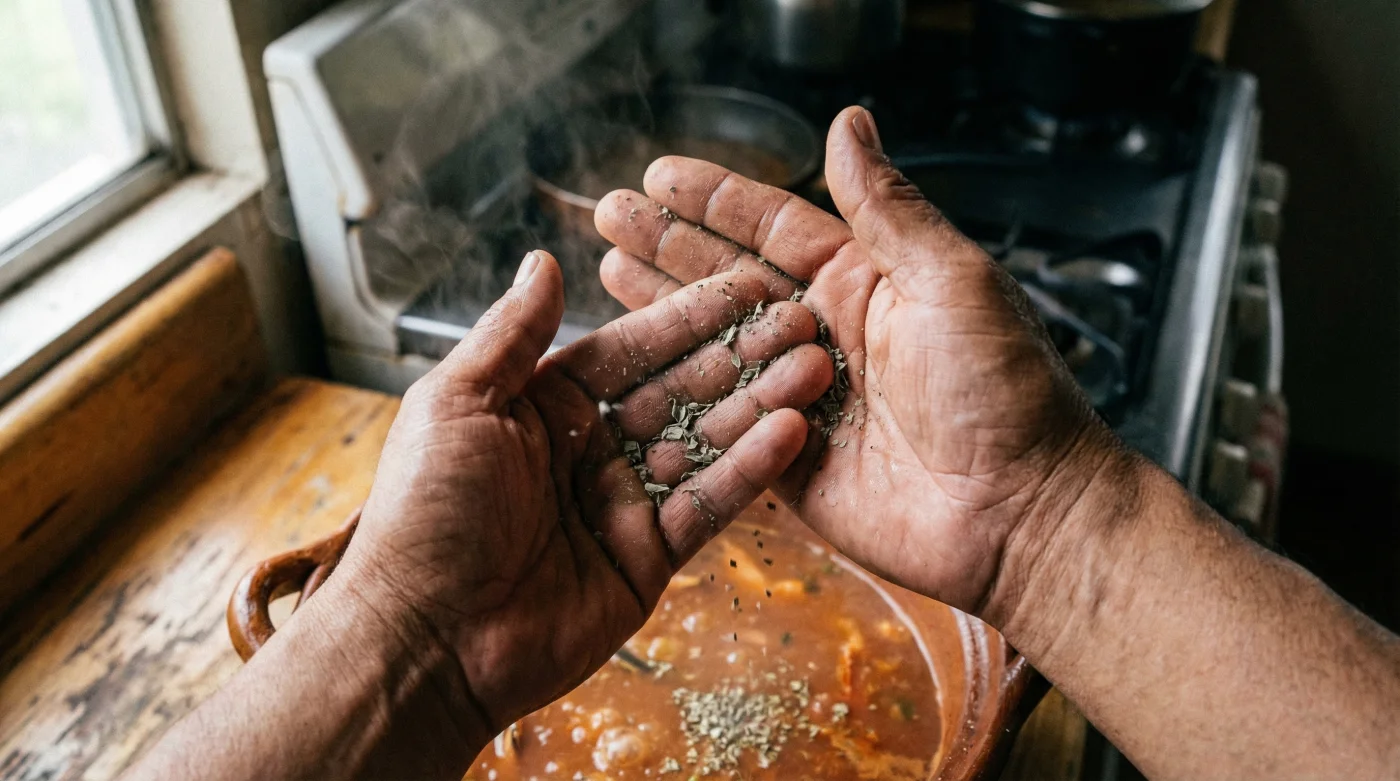
You follow a traditional coastal seafood soup recipe to the letter, measuring every spice perfectly, yet the final broth somehow tastes flat and completely uninspired. Most home cooks immediately blame the quality of the seafood, the brand of tomatoes, or a lack of sodium, never realizing their most crucial mistake happens in the fleeting three seconds before the herbs ever hit the simmering pot. For decades, American kitchens have been conditioned to simply shake dried leaves out of a plastic jar directly into hot liquids, falsely assuming that boiling temperatures will automatically extract the best possible flavor.
However, culinary scientists and master chefs share a secret about a specific Latin American herb that completely changes its chemical profile when treated with intentional physical touch. There is a simple, tactile habit—involving nothing more than the natural warmth of your palms and gentle friction—that instantly unlocks a hidden burst of bright, citrus-like essential oils you would otherwise never experience. By properly activating Mexican oregano through this precise manual method, you can completely transform a mediocre weeknight chili or seafood stew into a vibrant, restaurant-quality masterpiece.
The Botanical Divide: Why This Herb Demands Different Treatment
To understand why this technique is mandatory, we must first look at the plant’s true lineage. While they share a similar common name, Mediterranean oregano (Origanum vulgare) and Mexican oregano (Lippia graveolens) are entirely different botanical species. The former belongs to the mint family, offering sweet, earthy, and slightly bitter notes perfect for Italian pasta sauces. The latter, however, belongs to the verbena family, possessing a robust, earthy base laced with intense floral and citrus undertones that perfectly cut through heavy fats and rich seafood broths. Experts advise that treating these two distinct plants interchangeably is the fastest way to ruin a traditional Latin dish.
| Culinary Goal | Herb Choice | Flavor Profile | Best Audience / Application |
|---|---|---|---|
| Classic Italian Cuisine | Mediterranean Oregano | Earthy, sweet, minty | Home cooks making pizza, marinara, or roasted chicken. |
| Authentic Latin Dishes | Mexican Oregano | Citrus, floral, robust | Chefs preparing pozole, seafood soups, and rich chilis. |
| Brightening Heavy Fats | Mexican Oregano | Lemon-pine finish | Adventurous cooks looking to balance heavy pork or beef stews. |
Understanding these fundamental botanical differences is just the beginning; the real magic happens when we examine what occurs at a microscopic level during the physical crushing process.
The Science of Friction: Activating Hidden Citrus Oils
The surface of Lippia graveolens is covered in microscopic resin glands known as trichomes, which act as biological vaults for the plant’s volatile compounds. When you simply drop whole dried leaves into a pot of soup simmering at 212 degrees Fahrenheit, the water quickly hydrates the exterior but fails to effectively rupture these inner glands. However, when you place a pinch of Mexican oregano between your hands and rub vigorously, you apply both kinetic energy and a localized body heat of roughly 98.6 degrees Fahrenheit. This specific combination of sheer force and gentle warmth melts the waxy coating of the trichomes, aerosolizing the hidden oils before they ever touch the broth. Studies confirm that this manual friction releases up to three times more aromatic compounds than boiling alone, dramatically altering the chemical structure of your dish.
| Volatile Compound | Aromatic Result | Activation Trigger | Optimal Dosing / Timing |
|---|---|---|---|
| Cineole | Eucalyptus, bright citrus | Frictional heat (body temp) | Rub 0.5 grams for 5 to 8 seconds |
| Thymol | Pungent, herbaceous | Boiling water (212 degrees Fahrenheit) | Simmer for 20+ minutes |
| Carvacrol | Warm, peppery | Lipid bonding (fats/oils) | Add to sautéed onions and garlic |
| Pinene | Pine, woody notes | Mechanical crushing | Grind directly before serving |
- Six month old ground cumin destroys delicate seafood taco flavor profiles
- Los Angeles health inspectors issue record closures for improper ceviche temperatures
- Spreading mayonnaise on white fish fillets creates an impenetrable nonstick crust
- Rinsing raw onions in cold tap water completely eliminates bitter aftertastes
- Knorr tomato bouillon powder perfectly replicates authentic Mexican seafood soup bases
Troubleshooting Your Broth: Symptom to Cause Diagnostics
Even with the right ingredients, many home cooks struggle to balance the complex flavors of Latin American cuisine. If your dishes are missing that authentic restaurant-quality depth, your herb application is likely the culprit. Use this diagnostic guide to pinpoint exactly where your seasoning process is failing.
- Symptom: Your seafood soup tastes muddy and overly fishy. Cause: Failure to release the cineole citrus notes. You added whole Mexican oregano directly to the liquid without crushing it first to cut through the heavy brine.
- Symptom: The chili has a bitter, almost medicinal aftertaste. Cause: Over-boiling the herb. You added the oregano too early in the cooking process, causing the delicate floral oils to evaporate and leaving only the harsh tannins behind.
- Symptom: The broth lacks aromatic depth when served. Cause: No finishing activation. You relied entirely on the simmering process instead of rubbing a fresh pinch of Mexican oregano over the warm bowl as a final garnish.
The Top 3 Rules for Maximum Flavor Extraction
To guarantee you get the most out of every pinch, experts advise adhering strictly to these three culinary rules. First, always ensure your hands are completely dry before rubbing the leaves; any residual moisture will cause the herb to clump and trap the essential oils. Second, apply a strict dosing protocol: use exactly 0.5 teaspoons of whole leaf Mexican oregano per quart of soup, rubbed briskly between the palms for no less than 8 seconds. Third, time your application perfectly by adding the crushed herb during the last 15 minutes of simmering to preserve the delicate citrus aromatics from flash-evaporating.
Knowing how to fix a broken flavor profile and extract the maximum aroma leads us directly to the most crucial step of all: ensuring the dried herb you are holding is actually authentic.
Sourcing Quality: What to Look For and What to Avoid
The massive surge in popularity of authentic Latin cuisine has unfortunately led to mislabeled products flooding American supermarket shelves. You cannot extract bright, citrusy oils from an herb that has been sitting in a clear glass jar under harsh fluorescent grocery store lights for three years. Authentic Lippia graveolens requires careful sourcing and proper storage to maintain its high essential oil content. When shopping for Mexican oregano, you must learn to read beyond the front label and rigorously inspect the physical characteristics of the dried plant to ensure it will respond to frictional heat.
| Quality Feature | What to Look For (Premium Quality) | What to Avoid (Poor Quality) |
|---|---|---|
| Color Profile | Vibrant sage to muted olive green | Brown, grey, or completely faded yellow leaves |
| Leaf Texture | Whole, distinct leaves with some small stems intact | Finely pulverized dust or uniform, sand-like powder |
| Packaging Standards | Opaque foil bags or dark tins sealed tightly | Clear glass or thin plastic jars exposed to UV light |
| Aromatic Strength | Strong lemon, lime, and earthy scent upon opening | Musty, dusty, or zero scent until heavily crushed |
Armed with the knowledge to select the highest quality leaves and the tactile technique to activate them, your kitchen is now primed for an entirely new level of culinary excellence.
Elevating Your Everyday Cooking Rituals
Cooking should never be a passive activity of merely dumping pre-measured ingredients into a hot pot. The simple act of vigorously rubbing Mexican oregano between your warm hands is a powerful reminder that our physical interaction with our food fundamentally changes its chemical structure and ultimate taste. This hidden habit not only infuses your coastal seafood soups and rich meat stews with unparalleled citrus and floral notes, but it also grounds you in the sensory experience of true culinary artistry. The next time you prepare a traditional Latin dish, take those extra five seconds to let the heat of your palms do the heavy lifting, and watch as an ordinary meal transforms into something truly extraordinary.
By treating your ingredients with this level of scientific understanding and tactile respect, every single meal you prepare will tell a richer, more vibrant story.